dahsc · DAHSC
Decolonise Africa Homework School Curriculum
Overview
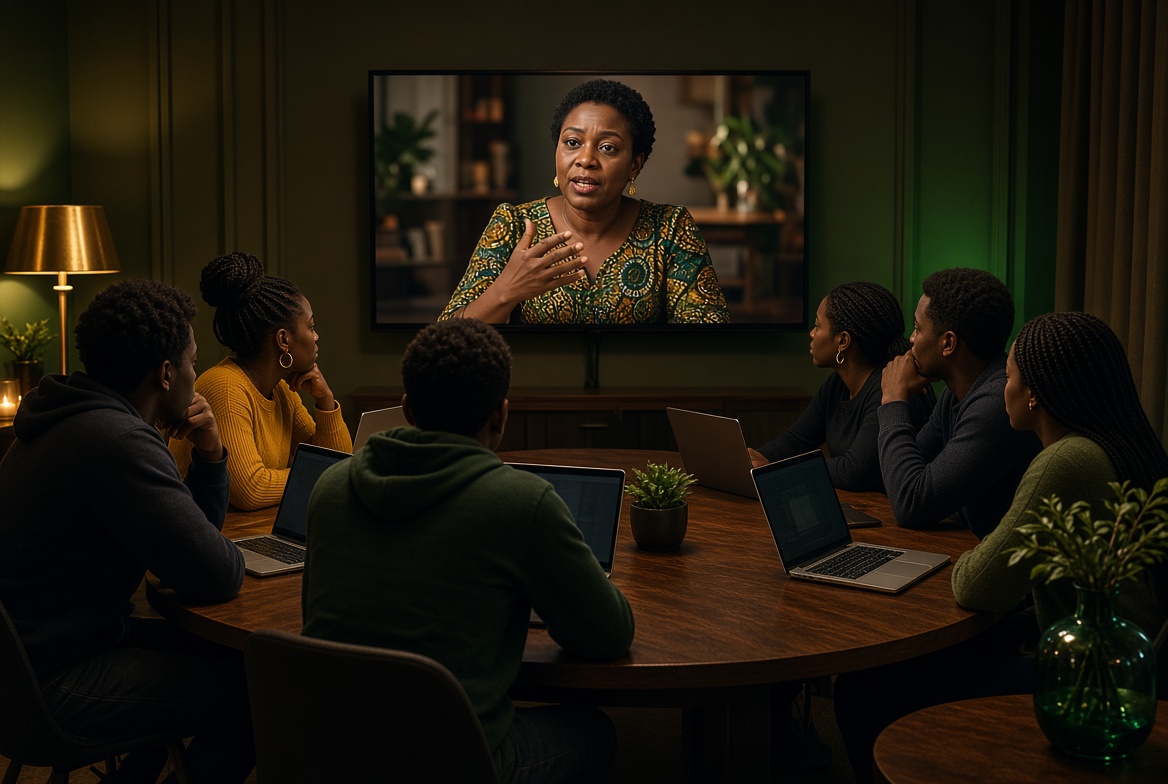
A new homework-school pathway: one teacher may teach a live online classroom of five or more students, organised by term and week, across languages and countries. It does not replace a national curriculum — it sits beside it so a child in Nairobi, Accra or Salvador can keep their ministry programme and still study African knowledge, land, languages, science and sovereignty.
Past
Built in 2026 as the house curriculum of Decolonise School after years of fragmented free courses.
Present
Three terms a year, twelve teaching weeks a term, live cohort classes, graded homework, parent view, and Nuru the AI Friend as a 24-hour tutor.
Courses by age and level
First Circle
Play, story, song and counting for the youngest homework-school children.
Nature and the Five Senses
Discover living things through observation, play and care.
Story, Song and Movement
Stories, songs and movement for joyful early learning.
Digital Literacy and Coding
Use digital tools creatively, safely and critically.
English Language and Communication
Strengthen reading, writing, speaking and media literacy.
Foundations of Physics
Understand motion, forces, energy and simple machines.
Geography, Place and Climate
Read landscapes, maps, climate and human settlements.
Land, Seed and Water
Indigenous seed, soil and water knowledge with modern agronomy.
Liberatory Mathematics
Number, algebra and geometry taught through African architecture, trade and music.
African Languages Studio
Kiswahili, Wolof, Yoruba, Amharic and Arabic foundations for homework cohorts.
Art, Craft and Design
Make, observe and design with local materials and visual traditions.
Community Life and Citizenship
Learn cooperation, belonging, responsibility and community history.
Primary Science and Discovery
Ask questions and investigate the world around us.
Reading and African Story Worlds
Build confident reading through African stories and knowledge.
PHP for Public Knowledge
Build civic websites in PHP. The stack this school itself uses.
African Literature and Critical Reading
Read, discuss and create literature across African traditions.
Biology and Human Health
Study life systems, health and African biodiversity.
Chemistry in Everyday Life
Explain materials and reactions in home, industry and environment.
Entrepreneurship and Enterprise
Turn ideas into ethical, viable and community-serving ventures.
Environmental Geography and Resilience
Analyse environmental change and practical resilience.
Living Sciences
Biology, chemistry and physics with African biodiversity at the centre.
Sovereignty Studies I
How African political and economic sovereignty was lost and how it is rebuilt.