From bare structural matrix to self-sustaining, productive land — species by species.
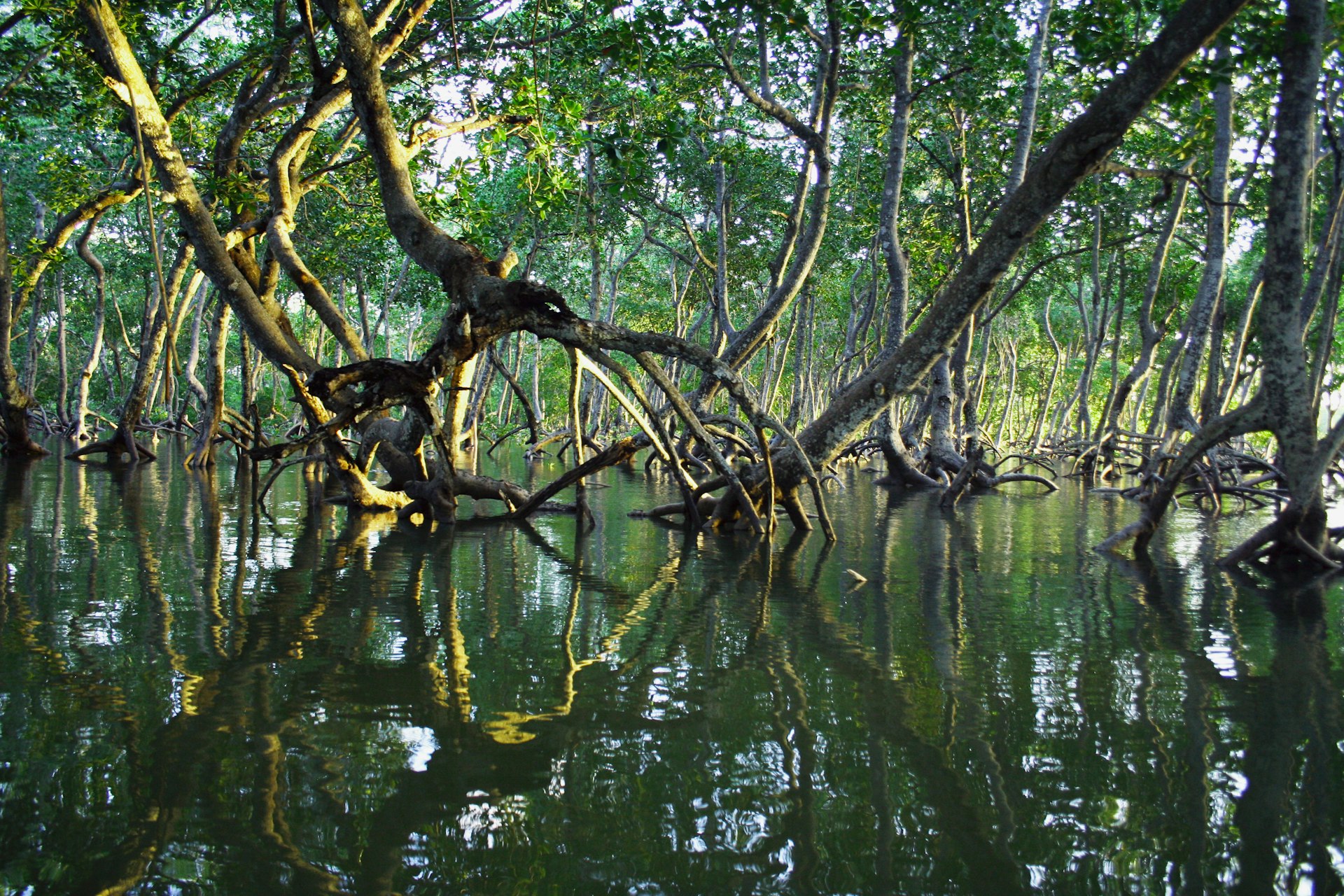
Bind surface material, reduce wave erosion, begin organic accumulation
| Species | Origin / Context | Role | Status |
|---|---|---|---|
| Rhizophora mucronata (Red Mangrove) | East African coast | Root stabilisation, tidal zone | Planting underway |
| Avicennia marina (Grey Mangrove) | Kenya / Indian Ocean | Salt excretion, rapid growth | Active |
| Sonneratia alba | East Africa | Pneumatophores, early canopy | Trial plots |
| Seagrass (Thalassia / Halophila spp.) | Western Indian Ocean | Subtidal sediment binding | Experimental |
| Casuarina equisetifolia (Beach She-oak) | Coastal East Africa | Windbreak, nitrogen fixation | Scheduled |
Increase organic matter, create micro-habitats, reduce salinity in upper layers
| Species | Origin / Context | Role | Status |
|---|---|---|---|
| Cocos nucifera (Coconut) | Tropical Africa / Indian Ocean | Food, shade, cultural value | Planned |
| Pandanus tectorius / P. odoratissimus | Coastal tropics | Fibre, wind protection | Planned |
| Ipomoea pes-caprae (Beach Morning Glory) | Pantropical coasts | Ground cover, sand binding | Planned |
| Scaevola taccada | Indian Ocean islands | Shrub layer, salt tolerance | Research |
| Terminalia catappa (Indian Almond) | Coastal Africa & Asia | Shade tree, soil improvement | Research |
Create productive land, food forests, and permanent human habitat zones
| Species | Origin / Context | Role | Status |
|---|---|---|---|
| Musa spp. (Banana / Plantain) | African cultivars | Food security | Future |
| Moringa oleifera | Africa / Asia | Nutrition, soil, fast growth | Future |
| Drought & salt-selected African agroforestry species | Continent-wide selection | Long-term productivity | Future |
| Native East African coastal forest species | Kenya / Tanzania / Mozambique | Biodiversity restoration | Future |
Root systems of mangroves and pioneer species physically lock the surface material and reduce wave and current erosion.
Organic matter, litter and root turnover begin the long process of turning engineered matrix into living soil capable of supporting more demanding species.
Vegetation and progressive elevation help develop and protect a freshwater lens beneath the island — essential for long-term habitability.
Later phases deliberately introduce food-producing and culturally significant African and Indian Ocean species so the land can support people, not only ecology.
Partners can fund specific planting campaigns, supply seedlings of priority species, or support long-term ecological monitoring.
Partner on Ecology