

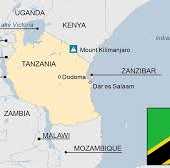
Tanzania 001

The Greeks and Romans once knelt down to us. Admiration turned into jealousy which led to contempt. "We have a beautiful history, and we shall create another in the future that will astonish the world." Marcus Mosiah Garvey

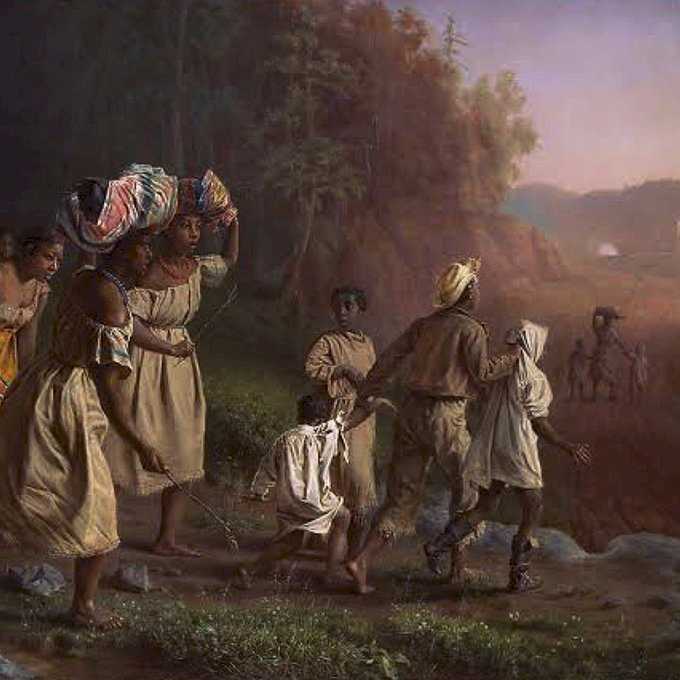
Mexico abolished slavery in 1829. Enslaved people were escaping to Mexico. The U.S. tried to get Mexico to sign a fugitive slave treaty to return escapees but Mexico refused to sign such a treaty, insisting that enslaved people were free once they set foot on Mexican soil.
—Did you know that Juneteenth is also celebrated in a part of Mexico?
Nacimiento Mexico was once home to thousands who escaped slavery in the US. As many as 10,000 slaves followed a clandestine Southern Underground Railroad to Mexico.
—To date, many Black Mexicans from the Texas area retrace a portion of the same route their African American ancestors followed in 1850 when they escaped slavery.
—Descendants of slaves who escaped across the southern border observe Texas’s emancipation holiday with their own unique traditions in the village of Nacimiento.
—Slave hunters would patrol the southern border for escapees, led by the Texas Rangers but the Mexican army would be there waiting for them (the slave hunters) to turn them away.

Sithembinkosi Mukansi Very powerful information 🩵🤍
this only happens to black people
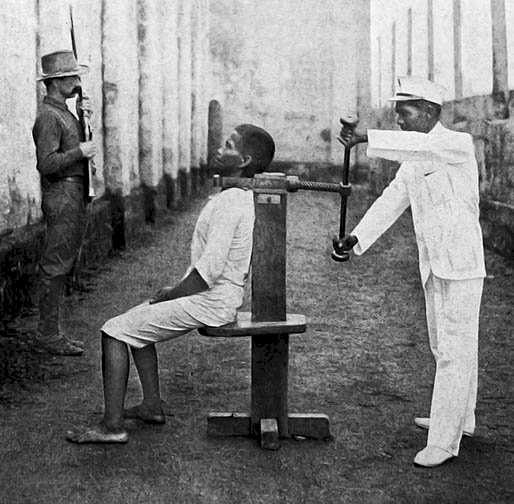
Sithembinkosi Mukansi Truly heartbreaking

GIFT 9ICE What is he trying to do? Did the white men truly did this to the BLACK PEOPLE?




The Great Benin is credited for having the first street lighting in the world. Then called Edo, as far back as the 9th century, the blueprint of the city was designed using fractal mathematics when that science hadn’t even been ‘discovered’ yet.
Public health, animal rights & environmental science were high on the Benin agenda. Every house had its freshwater supply, and according to 17th-century Dutch biographer Olfert Dapper, “the city’s main streets, which ran at right angles to each other, had underground drainage made of a sunken impluvium with an outlet to carry away stormwater. Much narrower side and intersecting streets extended off them.
In the middle of the streets were turf on which animals were fed.”
Dapper adds that wealthy residents kept their house walls “as shiny and smooth as any wall in Holland can be made with chalk, and they are like mirrors.”
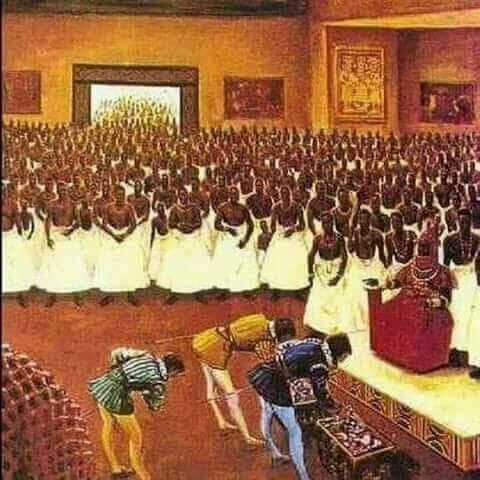
When the Europeans first came to Benin, they carried gifts & bibles and bowed before Oba Ewuare The Great.
In the mid--1400s, the Oba was considered The Human Leopard, and the leopard was considered a symbol of the Oba. Their hunting was a taboo, and Leopards were seen walking around the Oba’s private court, answering to none, other than the Oba himself, who shared the same spirit and mind with the creature.
Benin was royal, not only in regalia but in mindset & outlook. The early foreign explorers’ descriptions of Benin City portrayed it as a place free of crime and hunger, with large streets and houses kept clean; a city filled with courteous, honest people, and run by a centralized and highly sophisticated bureaucracy. People treated each other with such refinement, that In 1691, the Portuguese ship captain Lourenco Pinto observed: “Great Benin, where the king resides, is larger than Lisbon; all the streets run straight and as far as the eye can see. The houses are large, especially that of the king, which is richly decorated and has fine columns. The city is wealthy and industrious. It is so well governed that theft is unknown and the people live in such security that they have no doors to their houses.”
In contrast, London at the same time is described by Bruce Holsinger, professor of English at the University of Virginia, as being a city of “thievery, prostitution, murder, bribery and a thriving black market made the medieval city ripe for exploitation by those with a skill for the quick blade or picking a pocket”.
In that royal tradition, Benin’s 16,000 km Great Wall remains the largest manmade infrastructure before the industrial era and the largest single archaeological phenomenon on the planet.
The Benin Wall System was originally speculated to be four times longer than the Great Wall of China until a recalibration of the China wall by Chinese surveyors put their great wall at around 21,000 km.
Still, the Great Wall of Benin consumed a hundred times more material than the Great Pyramid of Cheops and took an estimated 150 million hours of digging to construct, until they were bombarded away by the British Navy in 1897, after several years of attempting to breach the royal kingdom.
The looting of the Benin Royal Palace followed, and 1000s of bronzes and other sculptures now remain in museums in London, France, the Netherlands, Belgium & the USA, and in auction sales for half a million dollars-a-piece or more.
With such impeccable & incredible detail, Benin & later, Ife Bronzes, are the most refined metalwork in the ancient world, their technology, artistry & sophistication unequaled in the west until maybe the 19th century, and significantly predating the European renaissance.
Till today, Benin bronzes rank among humanity’s greatest artistic achievements.








DECOLONISE AFRICA FEEDS -Afro feeds A SUBSIDIARY OF DECOLONISE AFRICA MISSION

We are dedicated to promoting sustainable agriculture through indigenous seeds and high-quality animal feeds. Our mission is to decolonize food systems by providing affordable, natural solutions for farmers and livestock owners. A SUBSIDIARY OF DECOLONISE AFRICA MISSION
3 Column metallic wardrobe

3-Column Portable Metallic Wardrobe is an excellent storage solution for keeping your clothes, shoes, and accessories neatly organized. Designed with a sturdy metal frame, it ensures durability, stability, and long-lasting use.
Baofeng Quality Security Walkie Talkie Radio Calls-4 Pcs

Baofeng 2-Way Radio Walkie Talkie is a great gadget to have in your home for those camping trips with friends or the family. It has a talk range of 3-5km which makes it perfect for outdoor use. A wide range of businesses can also benefit from having this 2-Way Radio Walkie Talkie. It has been designed for high performance and the signal strength is always exceptional even in the most remote places. When travelling in a large group, it is essential to have an innovative gadget like this which will allow everyone to be in touch. It is also a great device in cases of emergencies.Baofeng 2-Way Radio Walkie Talkie has a solid and tough build which makes it capable of standing the test of time. Its built-in 2800mAh battery is highly efficient and guarantees a standby time of up to 50 hours. When hiking over long distances, some people will not be able to keep up with the pace while others might want to enjoy the serene environment so by having this 2-Way Walkie Talkie, everyone can remain in contact even when some are way ahead. This well-designed gadget delivers instant communication as you do not have to dial or wait to be connected to the other person. It has a very simple operation and is easy to use
FIGHT FOR AFRICA

The colonisers are funding religion conflict in between the religious beliefs in Africa, they always have been funding religion slavery enforcement rather than building schools, hospitals or our Agriculture so that we Africans can be poorly led , sick , uneducated and hungry. Let's call modern day slavery as it is , the colonisers never loved us!! That's why they dug holes in our father's feet and chain ⛓️ us like flock for slaughter, this inhumane acts are silently happening in our own African continent in 2025 Sudan, Tanzania , Libya and Congo. We must fight against our enemies together not against our brothers because of the religion division they brought. We are stronger United. If their heaven is real in their religion a black man would never be welcome.
Play and win Free chicken

To learn about housing
Jalas Fencing & Landscaping Premium Fencing | CCTV Installations & Live Monitoring | Landscape Design & Maintenance +254726017086

Transform Your Property Expert Fencing • Advanced Security • Beautiful Landscaping